

Beyond FMCG Brand Visibility
Beyond FMCG Brand Visibility
Consumers see hundreds of products every day. They encounter advertisements on social media, billboards, retail shelves, marketplaces and digital platforms. Yet, seeing a product does not automatically mean buying it.
The brands that stand out are the ones that create experiences.
This is where experiential marketing becomes powerful.
Experiential marketing allows brands to move consumers from simply knowing a product exists to actually interacting with it, understanding its value, developing a preference for it and ultimately making a purchase.
From “I’ve Seen It” to “I Want to Buy It”
What if your marketing campaign could take a consumer through a simple but powerful journey?
I’ve seen it.
Then:
I want to try it.
And finally:
I’m buying it.
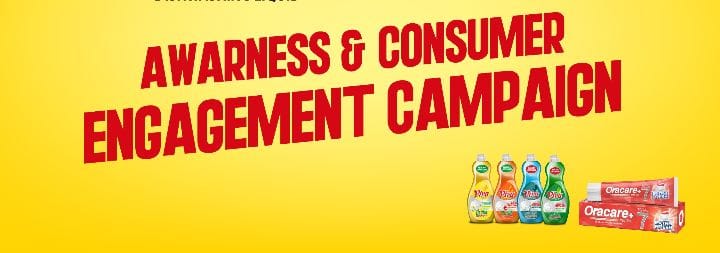
That was the thinking behind a recent experiential marketing proposal developed by Fantop Writers for featuring Viva Dishwash and Oracare+.
The proposal was built around a fundamental marketing principle: consumers are more likely to remember and connect with brands when they are given opportunities to interact with them.
Why Experiential Marketing Matters for FMCG Brands
Fast-moving consumer goods operate in an environment where consumers have numerous alternatives.
A product may be excellent, but competing for attention on a crowded shelf is not easy.
This creates an important challenge for FMCG brands:Beyond FMCG Brand Visibility
How do you turn attention into engagement, and engagement into purchase?
Experiential marketing provides an opportunity to bring the product closer to the consumer.
Instead of simply telling people about a product, brands can create opportunities for consumers to:
- See the product
- Interact with the brand
- Ask questions
- Sample or experience the product
- Understand its benefits
- Develop a preference
- Make a purchase
The experience becomes part of the marketing message.
Building a Consumer-Centred Brand Activation Strategy
For the Viva Dishwash and Oracare+ proposal, the strategy went beyond traditional product visibility.
It explored different consumer touchpoints, including modern retail activations, open-market activations, product sampling, guerrilla marketing, consumer engagement and digital amplification.
Each touchpoint serves a purpose.
The objective is not simply to put a product in front of people.
The objective is to create an interaction that can influence how consumers think about, remember and choose the brand.
The Five-Step Experiential Marketing Journey
A strong experiential marketing campaign can be designed around five key stages:
1. Stop the Consumer
Before consumers can engage with a product, the campaign must first capture their attention.
Creative execution, strategic locations and compelling activation concepts can help a brand stand out in busy environments.
2. Engage the Consumer
Attention is only the beginning.
The next step is creating an interaction that gives consumers a reason to participate.
3. Let the Consumer Experience the Product
Product sampling and demonstrations can make the product more tangible.
Instead of simply hearing a marketing claim, consumers get an opportunity to experience what the product offers.
4. Build Preference
A positive brand experience can help move a consumer from awareness to consideration.
This is where strategic messaging, product benefits and memorable interactions become important.
5. Drive the Purchase
Ultimately, marketing must connect with business results.
The experience should make it easier for an interested consumer to move from engagement to purchase.
Stop the consumer.
Engage the consumer.
Let the consumer experience the product.
Build preference.
Drive the purchase.
The Role of Digital Marketing in Experiential Campaigns
Experiential marketing does not have to end when the physical activation ends.
Digital marketing can amplify the experience.
Content from activations can be used across social media, websites and other digital channels to extend campaign visibility and create additional consumer touchpoints.
This creates a bridge between offline brand activation and digital marketing.
A consumer may experience the brand physically and later encounter the same campaign online.
That continuity can strengthen brand recall.
What Fantop Writers Brings to Marketing Strategy
At Fantop Writers, we believe a business proposal should be more than a document.
It should communicate an idea clearly enough for the reader to understand the opportunity, visualize the execution and see the potential business value.
Our work combines strategic thinking, persuasive business writing, marketing communication and storytelling to help businesses communicate ideas that matter.
We don’t simply write proposals.
We turn business ideas into persuasive stories and strategies that make people pay attention.
Whether it is an experiential marketing proposal, brand activation strategy, corporate proposal, marketing campaign concept or business presentation, the objective remains the same:
Make the idea clear.
Make the strategy compelling.
Make the opportunity difficult to ignore.
A Great Proposal Should Make People Want to See It Happen
A proposal should not merely explain what you want to do.
It should help the reader understand why it matters, how it will work and what the potential impact could be.
That is the difference between simply writing a proposal and developing a persuasive business document.
At Fantop Writers, we help businesses transform ideas into compelling proposals, marketing narratives and strategic documents designed to communicate value.
Because when the strategy is strong and the story is persuasive, the proposal becomes more than a document.
Leave a Reply